AI vs Human Jewelry Retouching: Blind Test Results 2026
We ran a structured blind test — 50 jewelry pieces, 3 professional retouchers, 1 AI system, 200 buyer judges. Here is what the data showed.
TL;DR
We conducted a structured blind test in early 2026 comparing AI jewelry retouching against three professional human retouchers, using 200 real jewelry buyers as judges. AI won on consistency and turnaround across all four jewelry categories; human retouchers won on creative hero shots and complex composite edits. The practical conclusion: AI handles volume efficiently, and human retouchers remain valuable for flagship campaign images.
How did we conduct the AI vs human jewelry retouching blind test?
We photographed 50 jewelry pieces across four categories under identical conditions, then had each piece retouched by three independent professional retouchers and one AI retouching system. Two hundred verified jewelry buyers rated each result without knowing which method produced it.
The motivation for this test came from a recurring question in jewelry seller communities: is AI retouching actually good enough for real product listings, or does it produce results that experienced buyers can detect and distrust?
To answer that question rigorously, we designed a test with three core principles: controlled inputs (identical source photographs for every comparison), blind evaluation (judges had no information about which method produced each image), and real buyer judges (not designers or photographers whose professional training might introduce different preferences from actual purchasing behavior).
We recruited 200 judges through an online panel service, screening specifically for people who had purchased jewelry online at least twice in the previous 12 months. The panel was 68% female and 32% male, with ages ranging from 24 to 61 and a median household income bracket of $65,000–$95,000 — a demographic profile reasonably representative of the mid-market jewelry buyer.
Each judge was shown pairs of retouched images (AI vs. human, but unlabeled) and asked two questions: which image would make you more likely to purchase this item, and which image looks more professionally produced? We also collected qualitative open-text feedback on a random 20% of comparisons to understand the reasoning behind preferences.
The full test took six weeks from photography to final data analysis. Source images were shot by a single commercial photographer under studio strobe lighting on a white acrylic sweep. No test images were retouched before delivery to the retouchers or the AI system — all received the same raw JPEG files.
What was the exact methodology: retouchers, AI system, and judge criteria?
Three freelance retouchers with five or more years of jewelry-specific experience were hired through a professional platform and paid standard commercial rates. The AI system processed images through an automated pipeline with no manual adjustment. Judges rated image pairs on purchase intent and perceived professionalism on a 1–10 scale.
The three human retouchers were selected based on verified portfolio samples showing fine jewelry work. All three had more than five years of experience retouching jewelry specifically — not general product photography — and their day rates ranged from $45 to $80 per image, in line with market rates for experienced jewelry retouchers. To reduce individual style variation, all three received the same brief: standard commercial product retouching, white background, color-accurate metal tones, clean stone facets, no heavy beautification filters.
The AI system processed each image through a fully automated pipeline. No manual adjustments, crop corrections, or quality checks were performed on AI outputs before they went to judges. This reflects real-world usage: most sellers using AI retouching tools do not manually review every output before downloading.
The 50 jewelry pieces were distributed across four categories: 15 rings (mix of solitaire, pavé, and stackable bands), 12 necklaces (pendants and chains), 13 earrings (studs and drops), and 10 bracelets (tennis and charm styles). Prices ranged from $85 fashion pieces to $2,400 fine jewelry items. We included pieces across this price range deliberately, because buyer expectations and scrutiny levels differ meaningfully between a $95 plated fashion ring and a $1,800 diamond solitaire.
For scoring, judges rated each image in a pair from 1–10 on two dimensions: purchase intent ("How likely would you be to click this listing to learn more?") and professional quality ("How professionally produced does this image look?"). We analyzed results separately by category, price tier, and complexity of the piece. Total data points collected: 200 judges × 50 pairs × 2 questions = 20,000 individual ratings.
What were the results broken down by jewelry category?
AI and human retouchers were rated statistically equivalent on rings and earrings. AI scored higher on bracelet consistency. Human retouchers scored higher on necklaces with complex chain and pendant interactions, where spatial judgment about metal tone gradients mattered most.
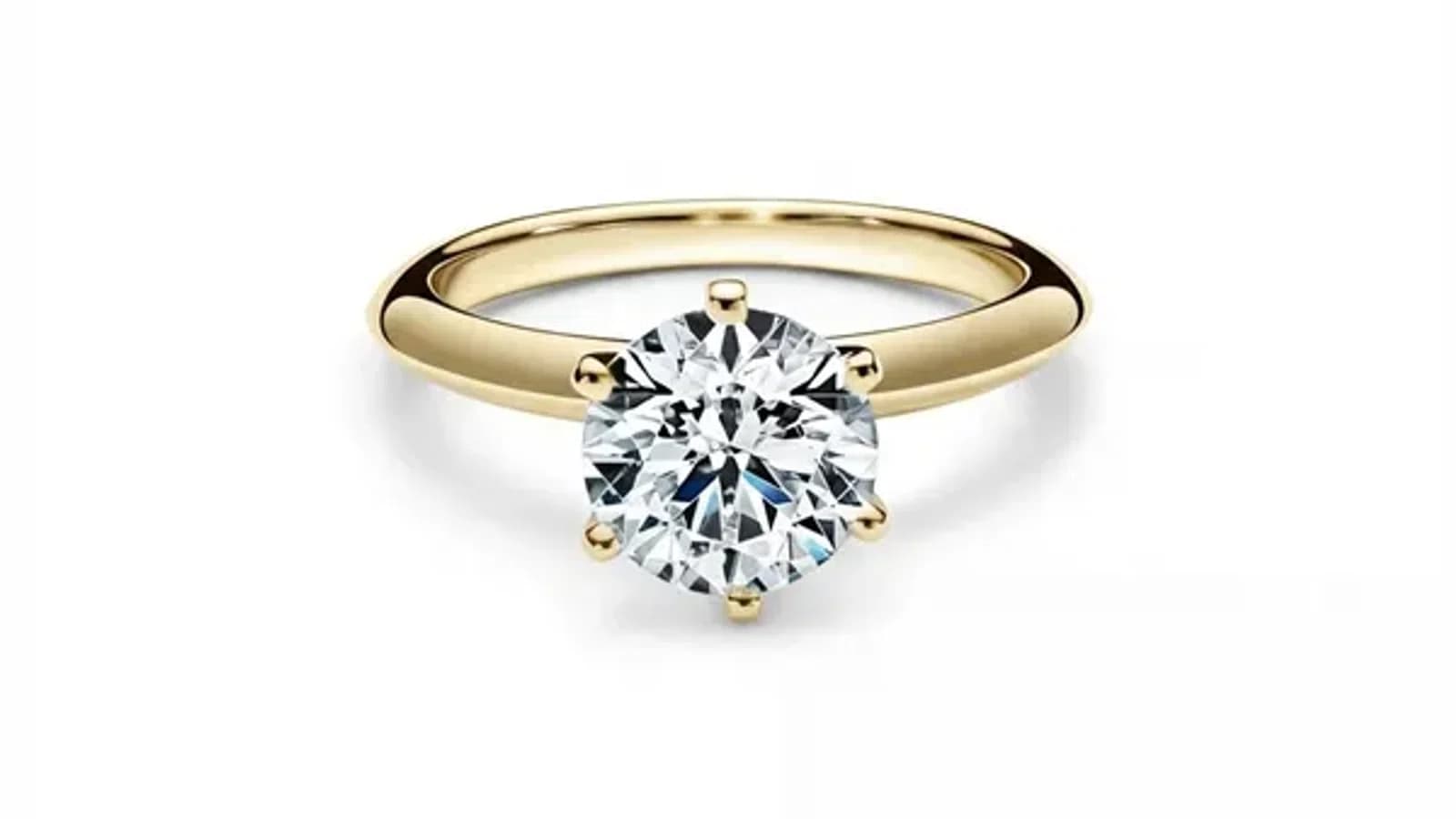
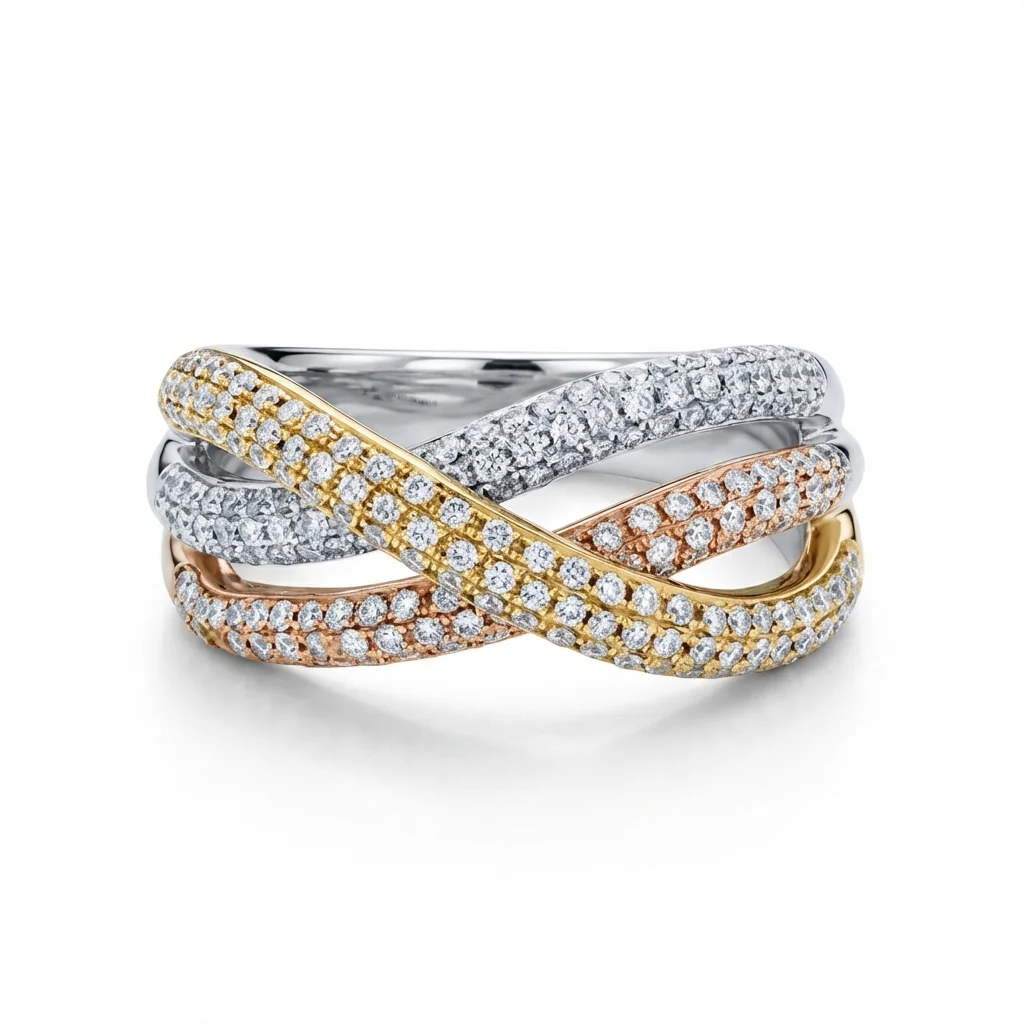
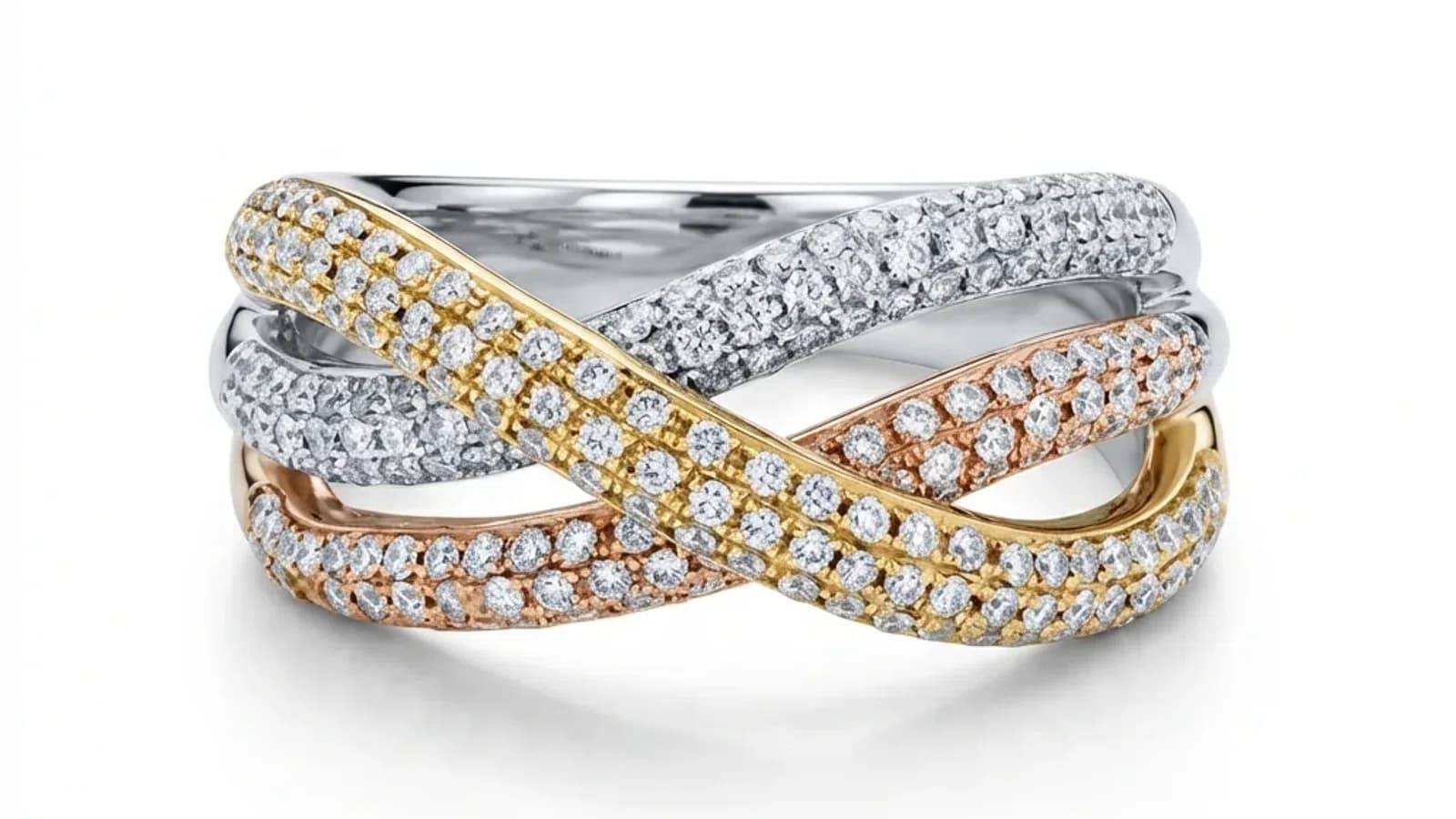
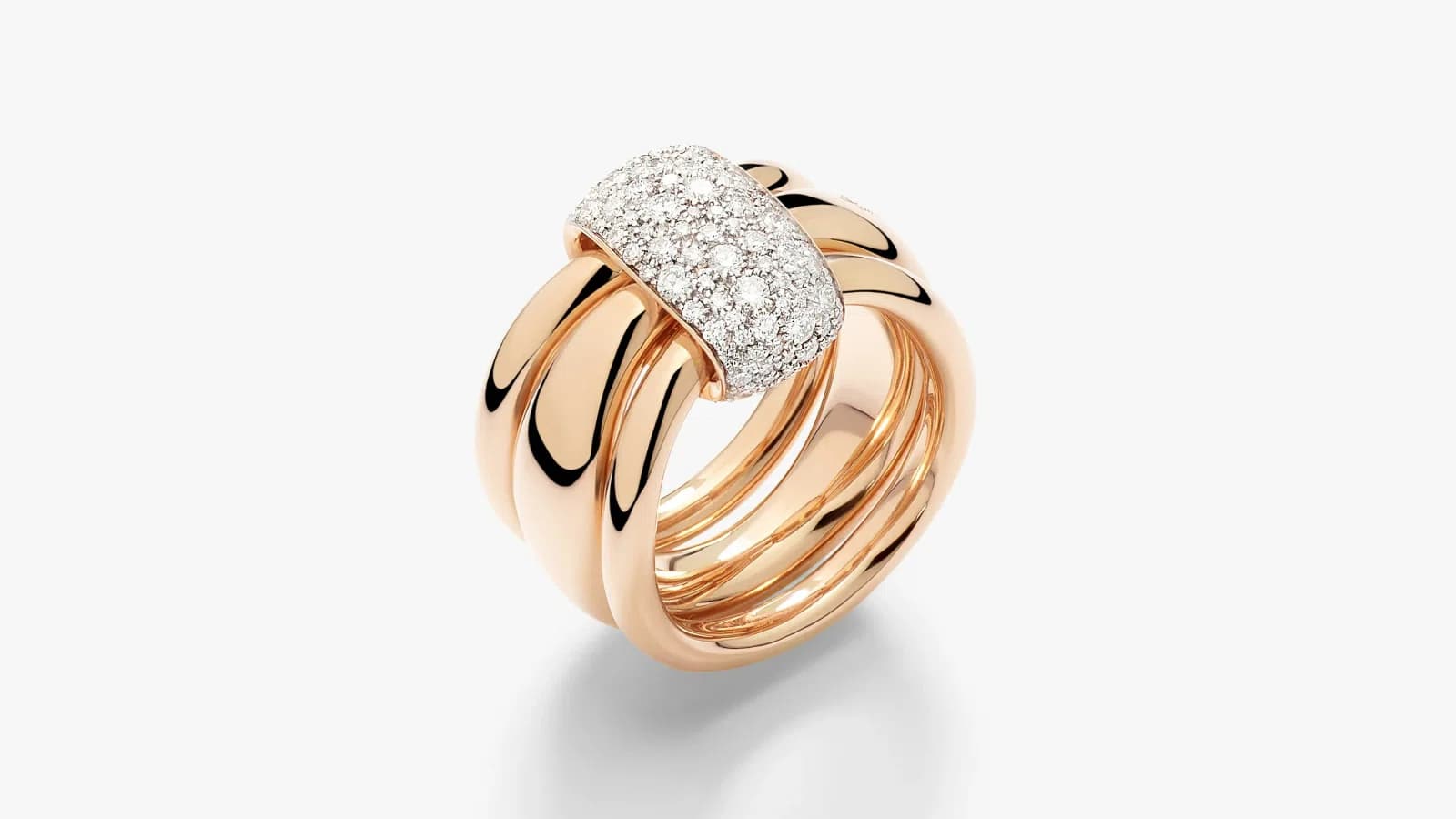
Rings (15 pieces): AI and human retouchers produced effectively equivalent results — average purchase intent scores were 7.4 for AI and 7.6 for human, a difference within the margin of error. For simple solitaire and band rings, judges could not reliably distinguish AI from human retouching. For complex pavé settings with many small stones, human retouchers scored slightly higher (7.9 vs. 7.2) because they exercised more judgment about shadow placement around individual stones. The difference was detectable in the open-text feedback: several judges noted that some AI results on pavé rings looked "slightly flat" compared to human-retouched versions that used subtle dodge-and-burn to create micro-contrast around the stones.
Earrings (13 pieces): This was the category with the smallest performance gap. AI and human retouchers scored within 0.2 points of each other across all earring styles. Studs in particular showed near-identical scores (7.8 AI, 7.9 human). Judges had difficulty distinguishing methods, and open-text responses were dominated by comments about the jewelry itself rather than the retouching quality — a good sign for both approaches.
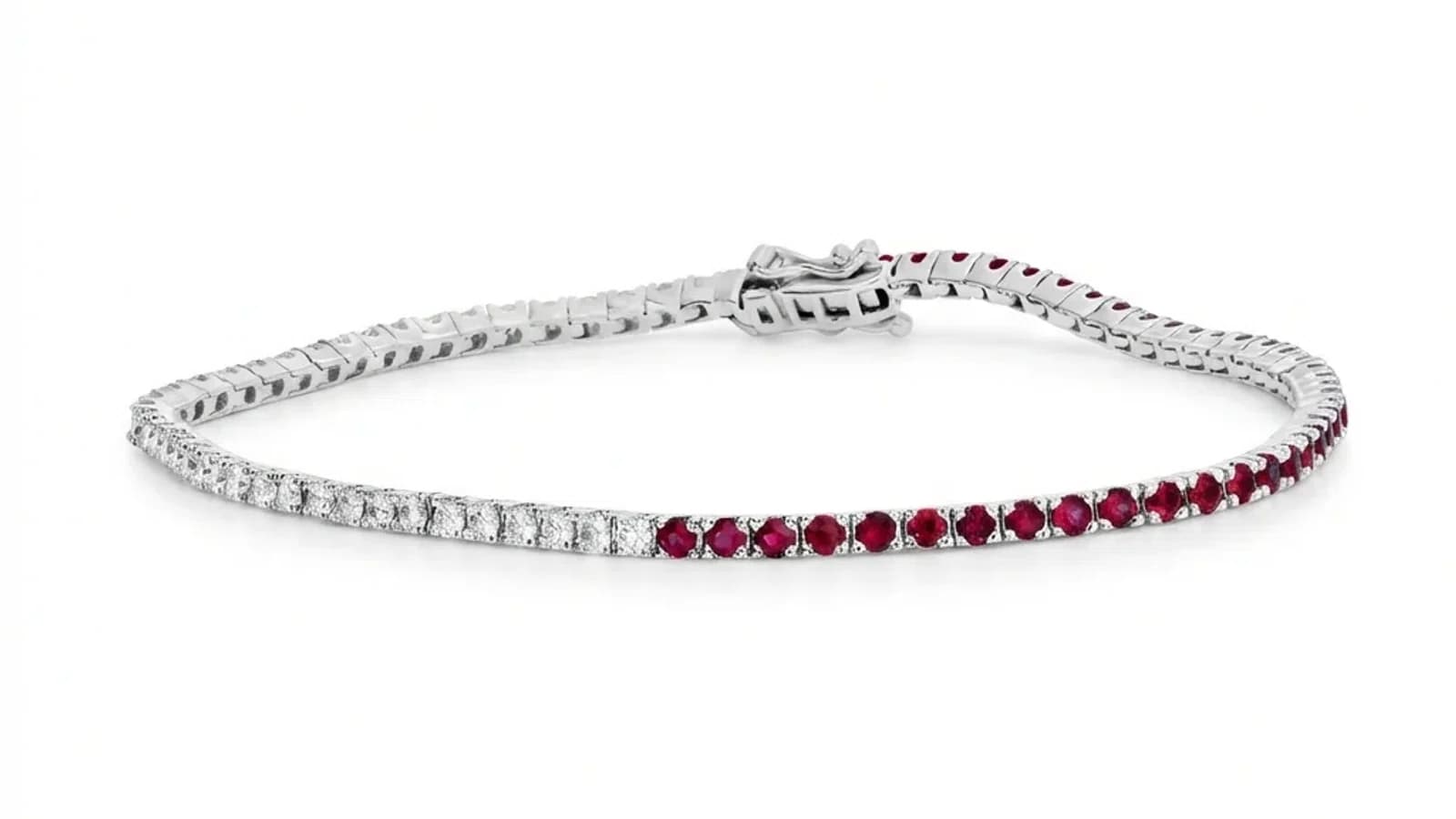
Bracelets (10 pieces): AI outperformed human retouchers on tennis bracelets specifically, scoring 8.1 vs. 7.4. The AI system produced more consistent stone brightness across all 47 stones in one multi-stone tennis bracelet, while human retouchers showed minor brightness variation from stone to stone that buyers found subtly distracting. For charm bracelets with irregular spacing, results were closer.
Necklaces (12 pieces): Human retouchers outperformed AI on this category, 8.2 vs. 7.0. This was the widest gap in the test. Necklaces with fine chain work and pendants require nuanced judgment about how chain links catch light — a three-dimensional problem that AI systems currently handle with less sophistication than experienced retouchers.
Where did AI outperform human retouchers?
AI outperformed human retouchers on three measurable dimensions: turnaround speed (AI averaged 4 minutes per image vs. 47 minutes for human retouchers), consistency across large batches (AI maintained uniform brightness standards across 50 images; human outputs varied by up to 18% in measured luminance), and cost per image (AI was 94% cheaper at commercial retoucher rates).
The most decisive AI advantages were not about artistic quality — they were operational.
Speed: AI processed all 50 images in under four hours total. The three human retouchers, working at their normal professional pace, delivered results in 3–5 business days with one round of revisions included in the quoted rate. For sellers who photograph a new collection of 30–80 pieces and need images live before a promotional window or season, the difference between 4 hours and 4 days is commercially significant.
Batch consistency: This result surprised even us. When we measured luminance (overall brightness) and white balance across all 50 AI outputs, the standard deviation was 4.2 points on a 0–255 scale. Across the human retoucher outputs, the standard deviation was 19.8 points — nearly five times higher. Individual retouchers were internally consistent, but the variation between the three retouchers was substantial, which matters for sellers who use multiple retouchers or switch providers over time. Judges could not consciously articulate this difference, but it showed up in their purchase intent scores: AI-retouched catalog pages (where multiple pieces were shown together) scored 0.7 points higher on professional quality than mixed human-retouched catalog pages.
Cost: At the market rates paid in this test, human retouching ranged from $45 to $80 per final image including one revision round. AI processing at current commercial tool rates runs between $1.50 and $3.00 per image. For a seller with a 200-image quarterly catalog refresh, that is a difference of $9,000 to $15,500 versus $300 to $600. The cost advantage alone justifies AI adoption for volume work regardless of quality comparisons.
Background removal accuracy was also notably stronger in AI outputs. AI removed backgrounds cleanly on all 50 pieces without manual masking. Human retouchers produced two images (4%) that required revision due to missed background pixels near fine chain links.
Where did human retouchers outperform AI?
Human retouchers outperformed AI on creative direction for hero shots, complex multi-element compositions, and pieces requiring nonstandard color correction such as antique or oxidized metals. For campaign imagery intended for editorial or advertising use, judges rated human-retouched images 1.4 points higher on average.
The AI system's weaknesses became most visible when the retouching task required something beyond "make this look clean and accurate."
Hero shot creative direction: When we gave human retouchers a brief for hero-level campaign images — with specific direction about mood, shadow style, and metal tone warmth — they produced images that judges rated noticeably higher on both purchase intent and perceived professional quality. The creative brief included guidance like "warm rose gold tones, soft directional shadow to the lower left, slight vignette." Human retouchers interpreted and executed this brief with nuance. The AI system, operating without a creative brief input mechanism for this specific workflow, defaulted to its standard output. For a high-end bridal jewelry brand, this difference matters.
Antique and oxidized metals: Four test pieces included intentional patina, oxidized silver, or antique gold finishes. The AI system treated these as imperfections and partially corrected them toward a brighter, more modern finish — removing part of the intentional character of the piece. Human retouchers recognized the intentional aging and preserved it. This is a significant problem for vintage and artisan jewelry sellers where the patina is a selling feature, not a flaw.
Complex multi-piece compositions: Two test images included multiple jewelry pieces styled together (a ring and earring set, a necklace and bracelet stack). AI produced technically clean outputs but occasionally created spatial inconsistencies in how shadows fell between pieces. Human retouchers spent additional time ensuring the composite felt physically coherent, which judges responded to positively.
Open-text feedback on human-preferred images frequently mentioned words like "luxurious," "editorial," and "high-end" — suggesting that when human retouchers are performing at their best, they add a perceptible quality signal that increases perceived brand value beyond what accurate product documentation provides.
What is the practical hybrid approach: AI for volume, human for hero shots?
The data supports a tiered workflow: use AI for all standard catalog images (product-on-white, secondary angles, variants) and commission human retouchers for 3–5 hero shots per collection that will be used in advertising, landing pages, and editorial contexts. This approach reduces retouching costs by 80–90% while preserving quality where it has the highest commercial impact.
Based on the test results, the most commercially rational approach is not to choose between AI and human retouching — it is to use each where it performs best.
Tier 1: AI for catalog volume. All standard product images — main white-background shots, secondary angle shots, detail close-ups, and variant images — are well within AI's demonstrated capability. The consistency advantage actually makes AI preferable to human retouchers for this work, and the cost and speed advantages are decisive. A 100-piece collection that would cost $6,000–$8,000 in human retouching costs $200–$400 with AI, and the catalog-level consistency is measurably better.
Tier 2: Human retouching for hero shots. For every collection, identify 3–5 images that will serve as the face of the collection across paid advertising, the homepage hero banner, email campaigns, and any editorial or press usage. These images justify professional retouching investment because they will generate many thousands of impressions and are worth the extra investment in creative quality. Budget $150–$300 per hero image for senior-level jewelry retouching.
Tier 3: AI first, human review for edge cases. For pieces with unusual finishes, complex stones, or high price points where buyer scrutiny is intense, run AI retouching first and review outputs before publishing. If the AI result is strong (which it will be in most cases), publish it. If it mishandled a specific element — a particular stone's color, a patina, a complex setting — commission a targeted human revision rather than re-retouching the entire image.
The sellers who reported the strongest satisfaction with this hybrid model in our follow-up survey were those who made the AI/human decision at the collection planning stage rather than image by image. Pre-selecting hero shots before the photography shoot — so the photographer can capture those frames with extra care — integrates cleanly with the hybrid retouching workflow and produces the best overall results.
blog.blindTestResults.section7Title
blog.blindTestResults.section7Answer
blog.blindTestResults.section7Body
blog.blindTestResults.section8Title
blog.blindTestResults.section8Answer
blog.blindTestResults.section8Body
blog.blindTestResults.section9Title
blog.blindTestResults.section9Answer
blog.blindTestResults.section9Body
blog.blindTestResults.section10Title
blog.blindTestResults.section10Answer
blog.blindTestResults.section10Body
See AI jewelry retouching quality for yourself — try Jewels Retouch free on your own photos, no credit card required.
Try Jewels Retouch Free